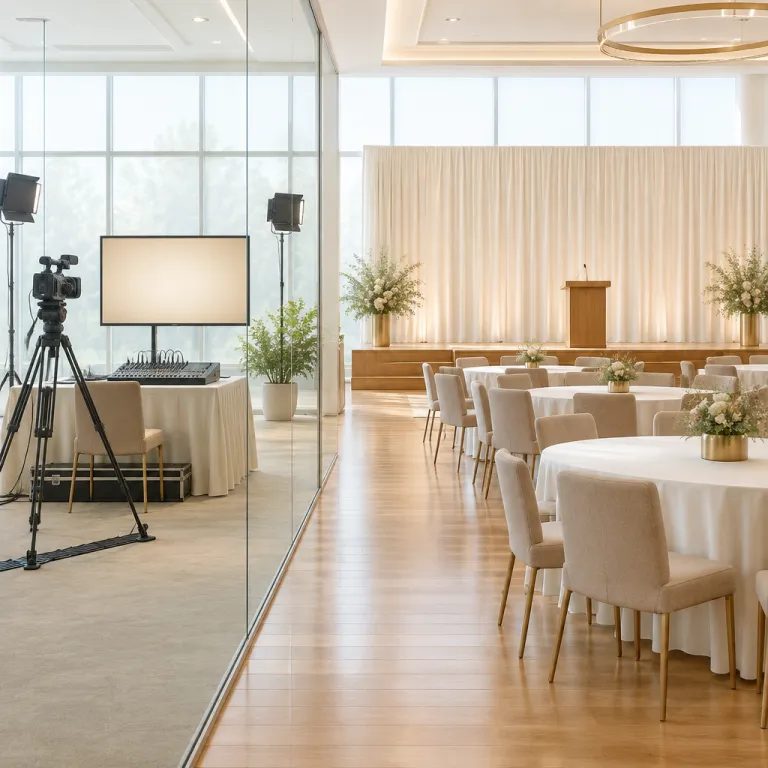
Why hybrid versus pure in person events is a portfolio decision
Australian B2B teams now face a strategic choice between hybrid versus pure in person events for every major line item. Many organisations default to a hybrid event format because it feels safer, yet this habit quietly erodes ROI when the format does not match the commercial objective. The most effective portfolios treat each event as a product with a clear purpose, defined audience, and a deliberate mix of in person and virtual experiences.
Across Australia, event professionals report that networking is now the top motivator for a majority of attendees, which means the in person event format still carries unique weight for deal making and executive access. In a 2023 survey by a national business events council, 68% of Australian B2B attendees ranked networking and relationship building as their primary reason for registering, ahead of content and vendor research. At the same time, internal client programs show that well designed hybrid events can increase audience reach by 30–60% compared with room only formats, especially when online attendees are given structured ways to interact with live sessions. The tension between reach and depth is exactly why the hybrid vs in person events debate must be framed as a portfolio optimisation problem rather than a binary choice.
Hybrid events combine a live in person event at a physical venue with a virtual event layer delivered through an event platform, and this blended structure can reduce onsite costs while expanding access for remote participants. In contrast, pure in person events concentrate budget into face to face engagement, which often produces the best experiences for senior audience members who value intimacy over scale. Your task as a B2B marketing director is to decide when a hybrid model serves pipeline, and when a focused in person events strategy will accelerate revenue more effectively.
Three objectives that demand pure in person events
Some business objectives simply perform better when the event is fully physical and every participant is in the room. Deal acceleration is the clearest example, because complex B2B sales often hinge on subtle face to face signals, corridor conversations, and the shared experiences that only a live in person event can create. When your sales team needs to align multiple stakeholders, a tightly curated in person events program with 40 to 80 attendees usually beats any virtual events alternative.
Executive relationship building is another objective where hybrid events rarely match the depth of a private physical venue with controlled audience members and carefully paced content. Senior leaders value their time, and they often treat an in person event as a signal of commitment, especially when travel, hospitality, and curated live engagement are thoughtfully designed. In these situations, adding online attendees through a parallel virtual event can dilute the perceived exclusivity and weaken the emotional impact of the experience.
Recruiting and employer branding also benefit from pure in person events, because candidates want to read the room, meet people, and feel the culture in a way that no virtual event stream can replicate. You can still capture content for later online use, but the core event best practices here focus on physical immersion, informal conversations, and unstructured time between sessions. For these three objectives, treat any hybrid event experiment as secondary, and invest instead in smaller, high touch in person events that maximise face to face engagement and long term loyalty.
For scalable education and lead nurturing, however, a well structured hybrid event can outperform a pure in person event by combining live classroom style sessions with interactive online attendees. Thought leadership programs, such as national roadshows or sector specific forums, gain reach when virtual attendees can join from remote locations without sacrificing too much engagement. In these cases, hybrid events allow you to reuse content across multiple channels, extending the duration of impact while keeping the marginal cost per participant low.
Partner enablement is another area where virtual events and hybrid formats shine, because partners are often geographically dispersed and time poor. A virtual event with strong engagement tools, or an events hybrid model that offers both physical and virtual access, lets partners choose how they participate while still receiving consistent content and training. When you align these hybrid events with structured follow up, you can generate qualified leads, improve product adoption, and strengthen your ecosystem without over investing in travel heavy in person events.
Education focused virtual hybrid programs also pair well with always on webinar strategies, especially when you apply best practices from Australian playbooks on maximising B2B webinar impact and audience engagement. By integrating your hybrid event platform with CRM and marketing automation, you can track which online attendees consume which content, and then route those data points to sales for timely follow up. For these objectives, the hybrid vs in person events decision usually tilts toward hybrid events, because the incremental reach and data richness outweigh the loss of some face to face intimacy.
A practical scoring grid for your next twelve months of events
To move beyond intuition, every Australian B2B marketing director should apply a simple scoring grid to each planned event in the next twelve months. Start by rating each event on five dimensions from one to five: need for face to face interaction, geographic spread of the audience, content complexity, budget constraints, and sustainability priorities. The combined score will guide whether a pure in person event, a fully virtual event, or a hybrid event format is most appropriate.
Scoring grid (1 = low, 5 = high)
| Dimension | 1–2 | 3 | 4–5 |
|---|---|---|---|
| Need for face to face interaction | Content first | Mixed | Relationship first |
| Geographic spread of audience | Local | Multi city | National / international |
| Content complexity | Simple updates | Moderate depth | Workshops / labs |
| Budget constraints | Severe | Balanced | Flexible |
| Sustainability priorities | Low | Important | Critical |
When the need for face to face interaction scores four or five, and the audience is concentrated in one region, a physical in person event at a local venue usually wins. If the same event also has a high budget score and low sustainability pressure, you can confidently design an in person events experience with rich live engagement and minimal virtual attendees. Conversely, when geographic spread and sustainability both score high, and content can be delivered effectively online, a virtual events strategy or an event virtual conference becomes the rational choice.
Hybrid events sit in the middle of this grid, especially when you have a mixed audience of local people and remote stakeholders who still need some live connection. In these cases, an event hybrid design that treats the virtual audience as a first class cohort, with tailored content and dedicated moderators, will outperform a simple stream of the in person event. For complex trade shows or partner expos, consider how a modern virtual trade show platform can extend the physical floor into an online environment, allowing online attendees to book meetings, consume content, and interact with exhibitors in real time.
Cost reduction in onsite expenses with hybrid events can be meaningful according to Australian production specialists, but technology and coordination add their own cost. For example, a 200 person in person event in Sydney might cost $650–$900 per attendee, while a comparable hybrid format with 120 in room and 300 online participants can bring the average cost per attendee below $400. That is why your scoring grid should also include an internal capability rating, assessing whether your team has the skills and tools to run hybrid virtual experiences without compromising quality. When capability scores are low, it is often better to choose either a focused in person event or a streamlined virtual event, rather than a poorly executed events hybrid experiment that frustrates both audience members and internal stakeholders.
To make this concrete, imagine a national customer forum with senior decision makers from across Australia. You might score it as follows: need for face to face interaction = 4, geographic spread = 5, content complexity = 3, budget constraints = 3, sustainability priorities = 4. The high scores for spread and sustainability, combined with a strong but not absolute need for in person contact, point toward a room first hybrid event with a flagship physical venue and a well resourced virtual layer for remote attendees. Capture this grid in a simple downloadable scoring template so your team can apply the same logic consistently across the full hybrid vs in-person events Australia portfolio.
The hidden cost of treating hybrid as a single format
One of the most common mistakes in Australian B2B portfolios is treating hybrid events as a single, generic format rather than at least three distinct models. In practice, you can run a studio first hybrid event where the physical venue is small and the main audience is online, a room first hybrid event where the in person attendees dominate, or a fully blended event hybrid where both cohorts are equal. Each model has different best practices, budget profiles, and engagement tactics, so collapsing them into one label hides critical trade offs.
When event professionals simply bolt a camera onto an in person event and call it a hybrid event, they usually create a second class experience for virtual attendees. These online attendees often receive flat content, limited interaction, and no meaningful way to influence the live room, which undermines both engagement and perceived value. Over time, this pattern damages trust, because people learn that hybrid virtual access is inferior, and they either disengage or pressure you to fund more expensive travel for every important event.
The cost is not only reputational; it is also financial, because you end up paying for physical production and virtual event infrastructure without achieving the full benefits of either. A more disciplined approach is to define whether each hybrid event is primarily serving remote virtual attendees, local in person attendees, or both, and then design the agenda, staffing, and event platform accordingly. For example, a studio first virtual hybrid format might use shorter live segments, more frequent breaks, and interactive tools to keep the online audience active, while a room first model prioritises long form discussions and high value face to face networking.
Organisations are increasingly integrating hybrid formats to expand reach and engagement, and improved platforms offer seamless integration between in person and virtual components, which in turn supports sustainability goals by reducing travel. This trend is particularly visible in Australia, where long distances between cities make remote participation attractive for many audience members and speakers. As you refine your portfolio, treat hybrid events as a toolkit of formats rather than a single checkbox, and match each configuration to the specific KPI and pipeline outcome you are targeting.
One change to ship before your next quarter event
Before your next major event in Australia, commit to one concrete change that aligns format with objective more rigorously. The most pragmatic move is to redesign the registration process so that every attendee, whether in person or virtual, selects their primary goal from a short list such as networking, learning, or evaluating vendors. This simple step gives you actionable data to adjust the balance between physical and online experiences in real time.
For an in person event, use these insights to reallocate time toward face to face activities when most attendees prioritise networking, even if it means shortening formal content. You might convert one plenary session into structured roundtables, extend breaks, or add hosted buyer meetings that pair people based on shared interests and deal stages. In parallel, capture key content with high quality audio and video so that you can repurpose it into a later virtual event or on demand series for remote stakeholders who could not attend the live venue.
For a hybrid event, the same registration data should drive how you design the virtual event layer and the event platform journey for online attendees. If a large share of virtual attendees select networking as their goal, invest in moderated small group sessions, curated matchmaking, and clear time slots where virtual participants can interact with speakers and sponsors. To deepen engagement further, consider layering in emerging formats such as augmented reality forums that blend physical and virtual experiences, especially for product demonstrations and complex solutions.
Over the next planning cycle, use this feedback loop to refine your hybrid vs in person events mix, gradually shifting budget toward the formats that generate the strongest pipeline, partnerships, and market insight. Many B2B organisations now run hybrid events, yet only those that align format with objective and audience behaviour see sustained gains in qualified leads and long term results. By making one disciplined change per quarter, you build a culture where every event, whether physical, virtual, or hybrid, is treated as a strategic asset rather than a calendar obligation.
FAQ
How should I decide between a hybrid event and a pure in person event for a sales kick off
For a sales kick off focused on deal acceleration and team cohesion, a pure in person event usually delivers the best outcomes. The need for face to face interaction, informal conversations, and shared physical experiences is high, and remote participation tends to weaken those dynamics. You can still record key content for later virtual events, but the core program should be fully in person.
When does a fully virtual event make more sense than hybrid
A fully virtual event is preferable when your audience is widely distributed, budgets are tight, and the primary objective is education or thought leadership rather than networking. In these cases, a well produced event virtual format can reach more people at lower cost, especially if you design for interaction through Q&A, polls, and breakout rooms. Virtual events also align strongly with sustainability goals by eliminating travel.
How can I keep online attendees engaged during a hybrid event
To keep online attendees engaged, treat them as a distinct audience with dedicated facilitation rather than passive viewers of an in person event. Use an event platform that supports chat, polls, and small group sessions, and assign moderators to represent virtual attendees in the live room. Shorter content blocks, clear time cues, and exclusive virtual only segments also help sustain engagement.
What metrics should I track to compare hybrid vs in person events
Key metrics include cost per qualified lead, meeting volume, pipeline influenced, and satisfaction scores segmented by in person and virtual attendees. For hybrid events, also track engagement indicators such as chat participation, session watch time, and conversion from online attendees to follow up meetings. Comparing these data across formats will show where physical, virtual, or hybrid events generate the strongest ROI.
How many formats of hybrid events should be in a typical Australian B2B portfolio
Most Australian B2B portfolios benefit from at least two distinct hybrid formats, such as a studio first model for national thought leadership and a room first model for regional partner enablement. Larger organisations may add a fully blended event hybrid format for flagship conferences where both physical and virtual audiences are equally important. The exact mix should follow your objectives, audience geography, and internal capability rather than a fixed template.