Why Australian B2B exhibitors must design for conversation time
Most Australian B2B exhibitors still judge a trade show by raw badge scans. Longer conversations inside a booth create more qualified pipeline, stronger partnerships and deeper market insight than any inflated lead list. The best trade outcomes come when your exhibit design deliberately slows people down rather than pushing them through.
Across the exhibition halls of Sydney, Melbourne and Brisbane, the booths that win tend to prioritise one clear message, one focused experience and one defined next step. Top performing exhibitors now design for five to ten minute interactions, because that duration allows a demo, a short diagnostic and a concrete follow up commitment. When you treat every show booth as a temporary field office instead of a branded billboard, your trade show ROI shifts from vanity metrics to measurable revenue.
This mindset changes how you brief your booth builder, how you specify custom trade elements and how you use services such as design fabrication or logistics. You start asking whether the exhibition booth layout supports three parallel conversations rather than whether the graphics look impressive from the café. You also begin to evaluate show displays, banner stands and digital displays by how they frame a business discussion, not just how they attract attendees from the show floor.
The single message rule and graphics that qualify from five metres
On a crowded trade show floor, your brand has about three seconds to earn a second look. The single message rule means choosing one promise, placing it at eye level and making it readable from at least five metres across the exhibition hall. That message should filter attendees so only the right people step into your show booth and invest their time.
In practice, this means stripping back cluttered graphics and treating every show display as a decision tool, not decoration. A high quality headline such as “Cut your cloud costs by 30 percent for complex B2B workloads” does more work than a wide range of vague taglines and product names. When your booth design uses dimensional branding, clear typography and focused exhibit design, the right prospects self select while the wrong ones keep walking.
Australian exhibitors who follow this approach often pair a strong headline with a simple visual that explains the experience trade visitors can expect. Instead of listing services in tiny fonts, they use large diagrams, outcome based icons or a single data point that anchors the exhibit. The most effective show exhibits in technology, mining or professional services then repeat that message consistently across banner stands, hanging signs and digital displays so the trade show narrative feels coherent from every angle.
For a deeper operational framework on aligning message, layout and follow up, many local teams now rely on an exhibitor playbook for Australian B2B trade shows that links booth graphics directly to qualification questions and post event workflows. This kind of structured approach ensures that every element of the show exhibits and show booths contributes to a measurable pipeline outcome rather than generic awareness.
Layout, staff ratios and the power of a private 1:1 corner
Physical layout is where contemporary trade show booth design thinking becomes most tactical for Australian exhibitors. Open layouts consistently outperform closed counters because they invite attendees into the booth and reduce the psychological barrier to starting a conversation. One eye level message, one demo station and one defined conversation space now form the structural essentials of a modern exhibit.
Staff to square metre ratios are the next critical lever, especially in high traffic events at ICC Sydney or the Melbourne Convention and Exhibition Centre. As a rule of thumb, one staff member per four to six square metres keeps the booth feeling active without overwhelming visitors or blocking the show floor. When too many team members crowd a small exhibition booth, attendees perceive pressure and either rush interactions or avoid the exhibit entirely.
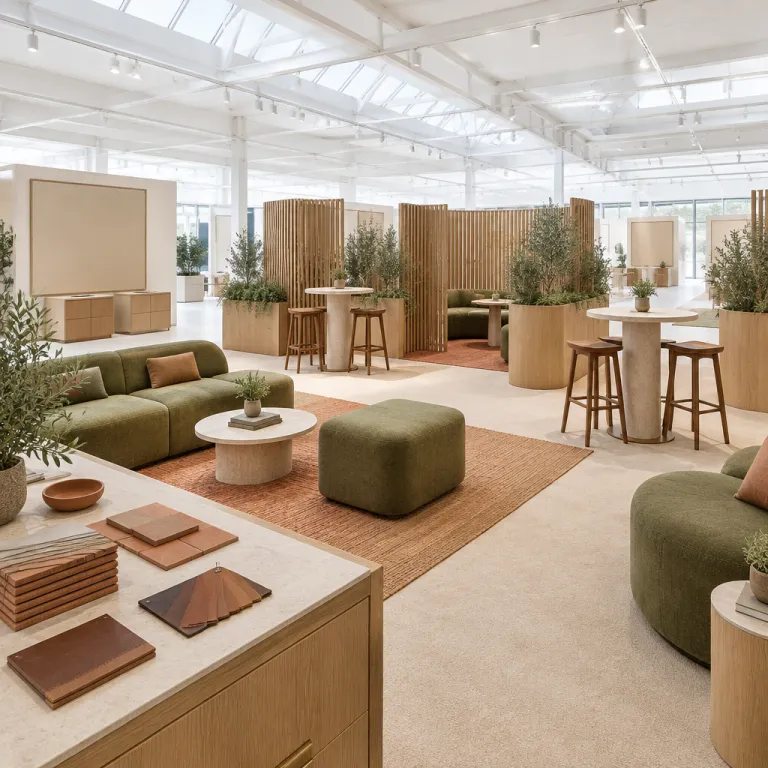
A small but radical idea gaining traction in Australian B2B events is the private one to one corner inside the booth. This can be a semi enclosed nook with acoustic panels, a small table and two chairs, positioned away from the main show displays but still within the branded footprint. Exhibitors use this space for deeper qualification, partner discussions or pricing conversations that would never happen in the noise of the show floor, turning a casual chat into a serious commercial opportunity.
Teams that want to push engagement further are also integrating immersive technologies into these layouts, because research on interactive exhibits shows that longer dwell time and higher recall are common outcomes when AR or VR is used well. When you combine a modular open plan, a focused demo zone and a quiet corner, you create a booth design that supports both quick scans and extended strategic dialogues. For advanced stand design and engagement tactics tailored to Australian B2B events, many managers now consult specialised guidance on maximising exhibitor impact so they can benchmark their own exhibit design against regional best practice.
Demo led engagement, modular systems and sustainable exhibits
In a mature B2B market like Australia, the demo must function as a qualification engine rather than a scripted sales pitch. The most effective show exhibits use short, scenario based demonstrations that surface fit, urgency and buying authority within a few minutes. This approach respects attendees’ time while giving your team enough depth to judge whether a lead is genuinely qualified or just curious.
Modular booth systems now sit at the centre of many trade show strategies because they allow exhibitors to reconfigure layouts for different venues without new design fabrication each time. A modular exhibition booth can shift from a compact nine square metre presence at a niche event to a larger island booth at a national trade show, while preserving consistent brand architecture. This flexibility reduces the cost per event, supports sustainable practices through reusable components and enables a wide range of booth designs over the duration of a multi year program.
Sustainability has moved from a marketing angle to a strict requirement in many Australian venues and corporate procurement policies. Exhibitors are choosing custom trade elements built from recycled aluminium, tension fabric graphics and rental furniture to reduce waste while still delivering a high quality brand experience. Case studies of low waste booths show that such exhibits can achieve higher attendee engagement and stronger perception, because the exhibit design aligns with the values of environmentally conscious attendees across age groups.
Immersive experiences using AR or VR are no longer experimental in this context, especially when they extend the core narrative of the show booth instead of acting as a gimmick. When a mining technology company uses VR to simulate a remote operations centre, or a cybersecurity firm uses AR overlays to visualise live threats, the experience trade visitors receive is directly tied to the product story. These kinds of exhibits keep people in the booth longer, deepen understanding and create memorable anchors that your sales team can reference in post event follow up.
From swag to strategy: reallocating budget for higher quality conversations
Many Australian exhibitors still allocate a disproportionate share of their event budget to generic swag such as tote bags, pens or stress balls. When you redirect even half of that spend into better exhibit design, staff training and targeted pre show outreach, the quality of conversations inside your booth improves dramatically. In one Australian SaaS case study, a mid sized vendor cut giveaway spend by 60 percent, reinvested in pre event email and LinkedIn outreach and saw a 38 percent lift in booth traffic, a 27 percent increase in average conversation length and a 22 percent improvement in lead to opportunity conversion over three events.
Instead of buying another pallet of giveaways, some exhibitors now invest in high quality briefing sessions for their team, focused on qualification questions, objection handling and CRM discipline. Others channel that budget into upgraded show display hardware, such as brighter LED walls, more durable banner stands or improved lighting that makes graphics and products easier to read from across the show floor. A growing number of Australian brands also fund hosted roundtables or invite only briefings adjacent to the exhibition, using the booth as the entry point to deeper executive level engagement.
Strategic exhibitors treat every trade show as part of a broader growth engine that includes affiliate partnerships, channel alliances and content syndication. Resources on how affiliate management powers B2B growth at Australian business events show how a well designed booth can anchor partner meetings and joint announcements. When your show booths become hubs for ecosystem conversations rather than simple product displays, the ROI extends far beyond the leads scanned during opening hours.
To sustain this shift, managers are tightening feedback loops between marketing, sales and operations after each event. They review which booth designs generated the longest average conversation duration, which messages pulled in the most relevant attendees and which services or demos correlated with closed revenue. Over time, this data driven approach turns modern trade show principles into a repeatable playbook that compounds results across multiple exhibits, venues and industries. A simple post event checklist—capture metrics, debrief the team, refine the message, adjust the layout and update the outreach plan—keeps every new booth iteration moving closer to measurable commercial outcomes.
FAQ
How should I measure success for a B2B trade show booth in Australia ?
Success for a B2B trade show booth in Australia should be measured by the number of qualified opportunities generated, the average conversation length and the conversion rate from exhibit interactions to pipeline, rather than by raw badge scans. Exhibitors should track metrics such as meetings booked, demos requested and partner discussions initiated directly from the booth. Over several events, these data points reveal which booth designs and engagement tactics consistently produce the best trade outcomes.
What layout works best for conversation focused booth designs ?
The most effective layout for conversation focused booth designs combines an open entrance, a central demo station and at least one semi private seating area. Open designs without high counters encourage attendees to step onto the stand, while clear pathways prevent congestion on the show floor. A small one to one corner inside the booth then supports deeper discussions with high value prospects or partners.
How can modular booths support a multi event strategy in Australia ?
Modular booths allow Australian exhibitors to adapt the same core structure to different stand sizes and regulations across venues such as ICC Sydney, MCEC or Brisbane Convention and Exhibition Centre. By reusing frames, panels and graphics, exhibitors reduce design fabrication costs and simplify logistics while maintaining consistent brand presence. This approach also supports sustainable practices, because fewer materials are discarded between events.
Are AR and VR worth the investment for trade show exhibits ?
AR and VR can be highly effective when they are integrated into the core story of the exhibit rather than used as standalone attractions. Research on trade show engagement shows that immersive experiences significantly increase attendee interaction and dwell time, which supports longer, more meaningful conversations. Exhibitors should ensure that any AR or VR content directly illustrates product value or complex processes relevant to their target attendees.
What should I do with swag budget if I stop buying tote bags ?
Swag budget previously spent on tote bags can be reallocated to staff training, upgraded graphics, better lighting or targeted pre show outreach campaigns. These investments typically have a stronger impact on lead quality and conversion than low value giveaways. Some exhibitors also use this budget to host small executive briefings or partner meetings anchored around the booth, deepening relationships that extend beyond the exhibition itself.